
Starting a Consulting Business: Complete Guide to Building Your Independent Practice in 2025
Author: Sanso Uka
Starting a consulting business represents one of the most accessible paths to entrepreneurship for professionals with specialized expertise. Whether you’re leaving corporate life or expanding your freelance work, launching a consulting practice allows you to leverage your knowledge while controlling your schedule and income potential.
The consulting industry continues to grow steadily, with businesses increasingly relying on external experts for specialized guidance. From hands-on experience working with new consultants, the transition from employee to independent consultant requires more than just technical skills—it demands business acumen, marketing savvy, and financial planning.
This comprehensive guide walks you through every essential step of starting a consulting business, from initial planning and legal setup to finding clients and pricing your services. You’ll discover practical strategies that work in today’s market, along with realistic expectations about timelines and challenges you might face along the way.

Understanding What It Takes to Start a Consulting Business
Before diving into the logistics of starting a consulting business, you need clarity on what consulting actually entails. Consultants solve specific problems for clients using their specialized knowledge and experience. Unlike employees, you’re paid for outcomes and expertise rather than time alone.
The most successful consulting businesses emerge from genuine expertise in a specific domain. You might specialize in marketing strategy, financial planning, operations improvement, human resources, technology implementation, or countless other areas where businesses need external guidance.
In practice, consultants typically need at least 3-5 years of relevant experience before clients will pay premium rates for their advice. While exact figures may vary depending on context and industry, many consultants report needing 6-12 months to establish steady client flow when starting from scratch.
Your consulting niche should intersect three critical factors: your expertise and passion, market demand, and your ability to communicate value clearly. Too broad a focus makes marketing difficult, while too narrow a niche may limit your client pool unnecessarily.

Creating Your Consulting Business Foundation
The foundation of your consulting practice begins with critical business decisions that affect everything from taxes to liability protection. Choosing the right business structure ranks among your first important choices when starting a consulting business.
Most consultants begin as sole proprietors for simplicity, though many transition to an LLC (Limited Liability Company) within their first year. An LLC provides personal liability protection while maintaining tax flexibility, typically costing $50-500 depending on your state.
Based on real use cases, professionals working in consulting often observe that proper business setup prevents costly mistakes down the road. You’ll need an EIN (Employer Identification Number) from the IRS, even if you don’t plan to hire employees initially. This free number separates your business and personal finances cleanly.
- Business Name: Choose something professional that reflects your niche without being too limiting as you grow
- Business Bank Account: Keep finances separate from day one to simplify accounting and tax preparation
- Accounting System: Set up simple bookkeeping software like QuickBooks or Wave to track income and expenses
- Insurance: Consider professional liability insurance (errors and omissions) starting around $500-1500 annually
Don’t overlook local business requirements like city licenses or permits. Requirements vary significantly by location, so check with your city clerk’s office or small business development center for specific obligations in your area.
When I first started consulting, I made the mistake of commingling personal and business expenses. It took me weeks to untangle everything at tax time, teaching me the hard lesson that proper setup saves significant headaches later.
Developing Your Consulting Service Offering
Defining exactly what you offer represents crucial work when starting a consulting business. Vague promises like “business improvement” or “strategic advice” don’t communicate clear value to potential clients who need specific solutions.
Your service offering should articulate the problems you solve and the outcomes clients can expect. For example, instead of “marketing consulting,” you might offer “customer acquisition strategy for B2B software companies” or “email marketing optimization for e-commerce brands.”
Professionals working with new consultants often observe that packaging services into clear deliverables makes selling easier than hourly consulting alone. Consider offering defined projects alongside hourly or retainer options to give clients multiple engagement models.
Common consulting service structures include hourly consulting for ad-hoc advice, project-based engagements with defined scope and timeline, monthly retainers for ongoing support, or workshop/training sessions for group learning. Many consultants offer multiple options based on client needs and preferences.

Document your methodologies and processes even if you’re just starting out. Having a structured approach to solving client problems increases perceived value and helps you deliver consistent results. You don’t need elaborate frameworks—simple step-by-step processes work perfectly.
Think through the entire client experience from initial inquiry through project completion. What does onboarding look like? How do you communicate progress? What deliverables do clients receive? Creating this clarity now prevents confusion and scope creep later.
Pricing Your Consulting Services Strategically
Pricing causes more anxiety for new consultants than perhaps any other business decision. When starting a consulting business, you need rates that attract clients while appropriately valuing your expertise and covering business expenses.
Hourly rates for consultants vary dramatically based on specialization, experience, and market. Entry-level consultants might charge $75-150 per hour, while experienced specialists in high-demand fields command $200-500+ per hour. While exact figures may vary depending on context, research rates in your specific niche and geography.
From hands-on experience, many consultants find that project-based pricing often proves more profitable than hourly billing. Clients appreciate knowing the total cost upfront, and you’re rewarded for efficiency rather than penalized for working quickly.
Calculate your minimum viable rate by considering your desired annual income, billable hours (typically 50-60% of your total work time), and business expenses. If you want to earn $100,000 annually and can bill 1,000 hours per year, you need at least $100 per hour before accounting for expenses and taxes.
- Value-Based Pricing: Price based on the value delivered to clients rather than time invested when possible
- Package Pricing: Bundle services into tiered packages (starter, professional, premium) for easier decision-making
- Retainer Agreements: Offer monthly retainers at a discount for committed ongoing work
- Sliding Scale: Consider offering reduced rates for nonprofits or small businesses if it aligns with your values
Don’t underprice your services hoping to attract more clients. Low rates often signal low quality, and you’ll burn out trying to serve enough clients at unsustainable rates. Start at a reasonable rate for your experience level and raise prices as you gain testimonials and results.
Build payment terms into your agreements upfront. Many consultants require 50% deposits for project work, with the balance due upon completion. Others invoice monthly for retainer arrangements. Clear payment expectations prevent awkward conversations and cash flow problems.
Building Your Consulting Business Online Presence
Your online presence serves as your digital storefront when starting a consulting business. Even if you plan to rely primarily on referrals, potential clients will research you online before making contact or hiring decisions.
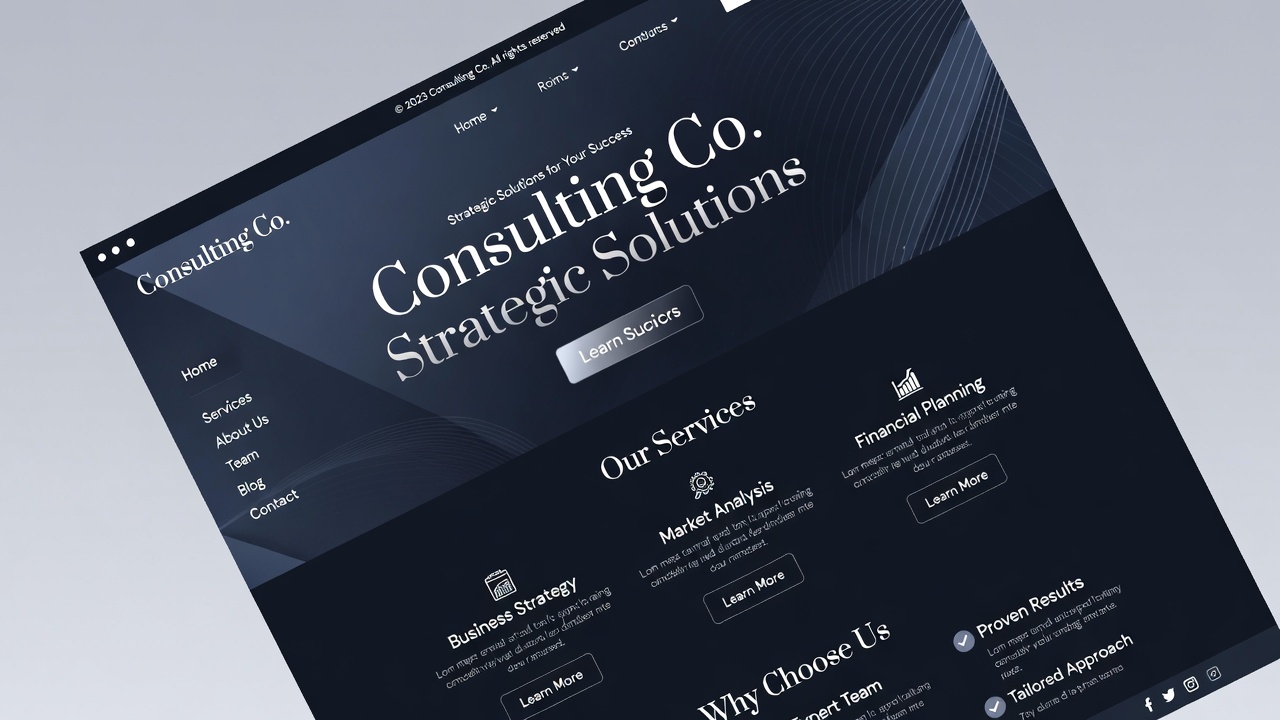
A professional website doesn’t need to be elaborate or expensive. A simple site with your services, expertise, case studies or examples, and clear contact information often suffices. Focus on communicating what you do, whom you serve, and how to get started working together.
In practice, your LinkedIn profile may generate more consulting opportunities than your website initially. Optimize your profile with a professional photo, compelling headline, and detailed experience section that highlights relevant expertise and accomplishments. Share valuable content regularly to stay visible.
Based on real use cases, professionals working in consulting observe that thought leadership content—articles, videos, podcasts—builds credibility faster than advertising. You don’t need to create content daily, but consistent monthly contributions establish your expertise over time.
Email marketing remains highly effective for consultants. Build an email list from day one by offering valuable resources in exchange for email addresses. Regular newsletters keep you top-of-mind when subscribers need consulting services or can refer you to others.
Social proof matters tremendously in consulting. Collect testimonials from every satisfied client, even pro bono or discounted work. Video testimonials carry more weight than written ones, though any genuine client endorsement helps build trust with prospects.
Finding Your First Consulting Clients
Client acquisition represents the biggest challenge when starting a consulting business. Unlike launching a product, you can’t simply open for business and wait for customers to arrive. Consulting requires proactive outreach and relationship building.
Your existing network provides the warmest starting point. Former colleagues, industry contacts, and professional acquaintances already know your capabilities. Let everyone in your network know about your new consulting practice, being specific about what you offer and ideal clients you serve.
From hands-on experience, the consultants who succeed fastest treat networking as an ongoing business development activity rather than something they do only when they need work. Attend industry events, join professional associations, and participate in online communities where your ideal clients gather.
Cold outreach can work for consultants when done thoughtfully and sparingly. Research potential clients thoroughly and craft personalized messages that demonstrate you understand their challenges. Offer genuine value before asking for anything in return.
- Referral Partnerships: Build relationships with complementary service providers who can refer clients needing your expertise
- Speaking Engagements: Present at conferences, workshops, or webinars to demonstrate expertise and reach potential clients
- Guest Content: Write articles for industry publications or appear on podcasts that your target clients follow
- Strategic Alliances: Partner with larger consulting firms or agencies that might need specialized expertise you provide
Consider offering a few pro bono or discounted projects initially to build your portfolio and generate testimonials. Choose these opportunities strategically—work with organizations or on projects that align with your target market and showcase your capabilities effectively.
Patience matters in consulting business development. While some consultants land clients immediately, most need several months of consistent networking and outreach before seeing steady income. Plan your finances accordingly and don’t give up prematurely.
Managing Consulting Projects and Client Relationships
Delivering excellent work and maintaining strong client relationships determines long-term success when starting a consulting business. First impressions matter, but sustained professionalism and results generate referrals and repeat business.
Clear communication prevents most client issues. Set explicit expectations about scope, timeline, communication frequency, and deliverables before beginning work. Document everything in a written agreement, even for small projects or clients you know personally.
Professionals working with consultants often observe that scope creep—clients requesting additional work beyond the original agreement—ranks among the most common challenges. Address scope expansion diplomatically by acknowledging requests, explaining they’re outside the current agreement, and providing options to address them.
Regular status updates keep clients informed and engaged throughout longer projects. You don’t need elaborate reports—simple email updates or brief calls work well. When clients understand progress and next steps, they feel confident in your work and less likely to micromanage.

Deliver more value than promised whenever possible. Small extras—additional resources, introductions to helpful contacts, or follow-up support—create memorable experiences that lead to referrals. You’re not trying to give away free work, just exceed expectations thoughtfully.
Ask for testimonials and referrals when projects conclude successfully. Most satisfied clients gladly provide testimonials if you make it easy—send a few specific questions they can answer rather than asking them to write something from scratch. For referrals, be specific about ideal clients you’re seeking.
Financial Management for Your Consulting Business
Sound financial management makes the difference between a sustainable consulting practice and a stressful side hustle. When starting a consulting business, you’re responsible for all aspects of business finances, from pricing to taxes.
Separate business and personal finances completely from day one. Open a dedicated business bank account and put all consulting income into that account. Pay yourself a regular “salary” by transferring money to your personal account rather than spending directly from business funds.
Based on real use cases, consultants should set aside approximately 25-30% of gross income for taxes, though your actual tax obligation depends on deductions and your tax bracket. Self-employment taxes add about 15% beyond regular income tax, catching many new consultants by surprise.
Track all business expenses meticulously. Deductible consulting expenses typically include home office costs, software subscriptions, professional development, marketing, travel, and equipment. While exact figures may vary depending on context, proper expense tracking can reduce taxable income by thousands of dollars annually.
- Invoicing System: Use professional invoicing software that tracks payments and sends automatic reminders for overdue invoices
- Emergency Fund: Build 3-6 months of business expenses in reserve to handle income fluctuations common in consulting
- Retirement Savings: Set up a Solo 401(k) or SEP IRA to save for retirement with higher contribution limits than traditional IRAs
- Quarterly Taxes: Pay estimated taxes quarterly to avoid penalties and large year-end tax bills
Consider working with an accountant, at least for your first year and during tax season. A knowledgeable accountant familiar with consulting businesses can identify deductions you might miss and ensure you’re meeting all tax obligations correctly.
Cash flow management requires particular attention in consulting. Clients may take 30-60 days to pay invoices, creating gaps between delivering work and receiving payment. Factor payment terms into your cash flow planning and maintain adequate reserves to cover expenses during slow periods.
Scaling and Growing Your Consulting Practice
Once you’ve established steady client flow, you’ll face decisions about how to grow your consulting business. Scaling consulting differs from scaling product businesses since your time remains the primary constraint.
The simplest scaling approach involves raising rates as your expertise and reputation grow. From hands-on experience, consultants often underestimate how much they can increase rates without losing clients. Annual 10-15% rate increases for existing clients and higher rates for new clients gradually boost income without adding work.
Productizing your knowledge offers another scaling path. Create courses, templates, guides, or group programs that package your expertise into formats that don’t require your direct time. While these products won’t replace consulting income initially, they provide passive income streams and reach more people.
Professionals working in established consulting practices observe that hiring help or subcontracting work allows taking on more clients. You might hire an administrative assistant to handle scheduling and invoicing, or bring on junior consultants to handle certain aspects of client work under your supervision.
Some consultants eventually transition into agency models, building teams that deliver services while they focus on business development and strategy. This represents a significant shift from being a solo consultant to running a consulting company, with all the management challenges that entails.
Not every consultant wants or needs to scale aggressively. Many build comfortable practices with steady income and reasonable hours without becoming large firms. Your scaling strategy should align with your personal goals and lifestyle preferences rather than external expectations.
Common Challenges When Starting a Consulting Business
Understanding common obstacles helps you prepare for and navigate challenges when starting a consulting business. Most difficulties aren’t unique to you—they’re shared experiences across new consultants in every industry.
Income inconsistency tops the list of challenges for most consultants, especially in the first year. You might have three clients one month and zero the next. This variability requires disciplined financial management and ongoing business development even during busy periods.
In practice, many consultants struggle with isolation, particularly after leaving corporate environments. Working alone from home lacks the social interaction and immediate feedback of traditional employment. Combat this by joining coworking spaces, attending networking events, or forming mastermind groups with other consultants.
Imposter syndrome affects even experienced professionals when starting a consulting business. You might question whether clients will value your advice or whether you’re qualified to charge premium rates. Remember that clients hire you for your experience and fresh perspective, not omniscience.
Time management becomes more complex when you’re responsible for business development, service delivery, administration, and strategy simultaneously. Many new consultants underestimate non-billable time required to run the business. Blocking dedicated time for different business functions helps maintain balance and prevent important tasks from being neglected.
You know how frustrating it is when you can’t decide whether to lower prices to attract more clients or raise rates to increase income per client. This common dilemma usually resolves by staying firm on appropriate pricing while improving your marketing and positioning.
Conclusion
Starting a consulting business offers tremendous opportunity for professionals ready to leverage their expertise independently. Success requires more than technical knowledge—you need business acumen, marketing skills, financial discipline, and persistence through inevitable challenges.
The consultants who thrive approach their practice as a legitimate business from day one, investing in proper setup, clear service offerings, and consistent business development. They price their services appropriately, deliver exceptional value, and build sustainable practices aligned with their personal and financial goals.
Begin with solid fundamentals: choose your niche, set up your business properly, price strategically, and focus intensely on finding those first few clients. As you gain experience and testimonials, the path becomes clearer and business development becomes easier.
Remember that building a successful consulting practice takes time—typically 1-2 years to establish stable income and reputation. Plan accordingly, maintain adequate financial reserves, and don’t give up during slow periods. With consistent effort and quality work, your consulting business can provide both financial rewards and professional fulfillment for years to come.
🛒 Recommended Resources for Starting a Consulting Business
Based on the consulting business strategies discussed in this article, we’ve curated a selection of top-rated resources that help consultants launch and grow successful practices. These recommendations support business setup, client management, and professional development for independent consultants.
Frequently Asked Questions About Starting a Consulting Business
How much money do I need to start a consulting business?
You can start a consulting business with minimal investment—often $500-2000 for basic setup including business registration, website, insurance, and essential software. The biggest requirement is having 3-6 months of living expenses saved since income may be inconsistent initially. Unlike product businesses, consulting doesn’t require inventory or significant equipment investment. Your main assets are your knowledge and time.
Do I need certifications to start a consulting business?
Certification requirements depend entirely on your consulting niche. Some fields like financial planning or certain types of health consulting require specific licenses or certifications. However, many consulting specialties have no formal certification requirements. Focus on demonstrable expertise through experience, results, and client testimonials rather than accumulating credentials solely for marketing purposes.
How long does it take to get clients when starting a consulting business?
Timeline varies significantly based on your network, niche, and marketing efforts. Consultants with strong existing networks might land their first client within weeks, while those starting from scratch often need 3-6 months of consistent outreach and networking. Based on real use cases, most consultants need 6-12 months to establish steady client flow. Plan your finances accordingly and maintain active business development throughout this period.
Should I start consulting part-time or full-time?
Part-time consulting while maintaining employment reduces financial risk and lets you test your business model before committing fully. This approach works well if your employer allows it and you can manage both responsibilities. Full-time consulting accelerates growth since you can dedicate complete attention to building your practice. Choose based on your financial situation, risk tolerance, and whether your current job permits outside consulting work.
What’s the difference between freelancing and consulting?
While these terms are sometimes used interchangeably, consulting typically focuses on strategic advice and problem-solving, while freelancing often involves tactical execution of specific tasks. Consultants usually command higher rates because they’re paid for expertise and recommendations rather than just labor. However, many independent professionals do both consulting and freelance work, especially when starting out.
How do I handle clients who don’t pay invoices on time?
Prevent payment issues by requiring deposits upfront (typically 50% for project work) and establishing clear payment terms in your contract. For overdue invoices, send friendly reminders at 7, 14, and 30 days past due, escalating firmness each time. Consider implementing late fees after 30 days. In practice, requiring deposits and maintaining professional follow-up resolves most payment issues without damaging client relationships.
Can I start a consulting business without experience?
You need relevant expertise in your consulting niche, but you don’t necessarily need prior consulting experience. Most successful consultants transition from industry roles where they developed specialized knowledge. If you’re new to your field entirely, consider gaining employment experience first or positioning yourself as a coach or trainer rather than consultant until you build deeper expertise.
How do consultants find clients consistently?
Consistent client acquisition requires ongoing business development activities. Successful consultants combine multiple strategies: networking consistently, creating valuable content, maintaining strong LinkedIn presence, asking for referrals from satisfied clients, speaking at industry events, and building strategic partnerships. Professionals working in consulting observe that most steady work comes from referrals and repeat clients rather than cold outreach.
What insurance does a consulting business need?
Professional liability insurance (also called errors and omissions insurance) protects consultants if clients claim your advice caused financial harm. This typically costs $500-1500 annually depending on coverage limits and your specific consulting focus. General liability insurance may also be necessary if you meet clients in person. Some clients require proof of insurance before engaging consultants, making this an important business investment.
How do I price my consulting services as a beginner?
Research typical rates in your specific niche and geographic market, then price toward the lower end of that range as you build experience and testimonials. Calculate your minimum viable rate based on desired income and realistic billable hours. While exact figures may vary depending on context, entry-level consultants often charge $75-150 per hour. Increase rates as you gain results, testimonials, and confidence. Don’t underprice drastically hoping to attract more clients—low rates often signal low quality.
- How to Make Money Online 2026
 How to Make Money Online 2026: A Practical Guide for Beginners By Sanso Uka Many people are searching for… Read more: How to Make Money Online 2026
 - Best Side Hustles 2026
 7 Best Side Hustles 2026: A Practical Guide to Increasing Your Income By Sanso Uka Finding the right way… Read more: Best Side Hustles 2026
 - How to Start a Freelance Career
 How to Start a Freelance Career for Long-Term Financial Success By Sanso Uka The idea of being your own… Read more: How to Start a Freelance Career
 - How to Negotiate Salary
 How to Negotiate Your Salary in 2026: A Practical Guide for Every Stage of Your Career By Sanso Uka… Read more: How to Negotiate Salary
 - Emergency Fund Calculator
 Author: Sanso Uka Emergency Fund Calculator: How Much You Really Need for Financial Security If you’ve ever wondered whether… Read more: Emergency Fund Calculator
 - How to Build an Emergency Fund Faster
 How to Build an Emergency Fund Faster Without Sacrificing Your Lifestyle Saving money for a rainy day is one… Read more: How to Build an Emergency Fund Faster
 - High Interest Deposit Account
 Author: Sanso Uka Complete Guide to High Interest Deposit Accounts (2026) If you’ve been wondering where to park your… Read more: High Interest Deposit Account
 - High Yield Interest Savings Account
 Complete Guide: High Yield Interest Savings Account 2026 Complete Guide: High Yield Interest Savings Account 2026 If you’ve ever… Read more: High Yield Interest Savings Account
 - Highest Interest Rate Savings Account
 The Complete Guide to the Best High Yield Savings Accounts in the United States (2026) If your savings are… Read more: Highest Interest Rate Savings Account
 - Best High Yield Savings Accounts in the United States
 The Complete Guide to the Best High Yield Savings Accounts in the United States (2026) If your savings are… Read more: Best High Yield Savings Accounts in the United States
 - Small Business Tax Deductions List
 The Complete Small Business Tax Deductions List for 2026 The Complete Small Business Tax Deductions List: 50+ Write-Offs for… Read more: Small Business Tax Deductions List
 - Starting a Consulting Business
 Starting a Consulting Business: Complete Guide to Building Your Independent Practice in 2025 Author: Sanso Uka Starting a consulting… Read more: Starting a Consulting Business